

There is no free lunch in free town
For over two decades, Nigeria’s health system has been substantially bankrolled by external donors, among them the United States government through PEPFAR, the Global Fund to Fight AIDS, Tuberculosis and Malaria, the Bill & Melinda Gates Foundation, and a long list of bilateral and multilateral partners.
The numbers are staggering. Between 2021 and 2025 alone, Nigeria received more than US$4.6 billion in international health grants from the Global Fund and USAID, with PEPFAR contributing an additional US$6 billion over the same period. By 2024, donor funding had risen to represent 19% of Nigeria’s total health expenditure—up from 14% the year before—with most of those resources managed directly by development partners rather than routed through government systems.
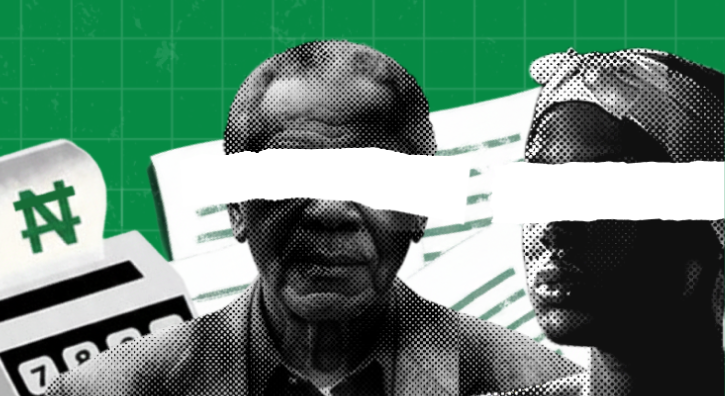
Yet despite this extraordinary level of investment, Nigeria continues to record some of the worst health outcomes on the continent. Maternal mortality stands at 576 deaths per 100,000 live births, among the highest in the world. Neonatal mortality sits at 41 deaths per 1,000 live births. The country has only 55,000 licensed doctors for a population of over 200 million, well below the WHO recommendation of ten physicians per 10,000 people. Government spending on health remains at roughly 0.5% of GDP, below the African regional range of 2–12% and a distant cry from the 15% commitment Nigeria made at the Abuja Declaration in 2001. In 2024, despite a federal health capital allocation of ₦434.8 billion, only ₦65.4 billion—about 15%—was actually released. In practical terms, the Federal Ministry of Health could not execute any capital project that year.
The persistence of these gaps suggests systemic weaknesses that cannot be fully understood without examining the dynamics of current funding models and their long-term implications.
Who Is Involved?
The donor health ecosystem in Nigeria is sprawling. At the top sit the behemoths: PEPFAR, which has disbursed over US$7.8 billion to Nigeria since its inception; the Global Fund, which allocated approximately US$933 million to Nigeria for the 2024–2026 grant cycle alone; and the Gates Foundation, which has made substantial investments across primary healthcare, polio eradication, and nutrition. These are complemented by the World Health Organisation (WHO), UNICEF, UNFPA, the World Bank, and a growing number of bilateral donors, including the United Kingdom and the European Union.
On the government side, the Federal Ministry of Health and Social Welfare (FMOHSW) is the nominal anchor institution, supported by the National Primary Health Care Development Agency (NPHCDA), the National Health Insurance Authority (NHIA), and state ministries of health. Civil society organisations, from large international NGOs to small community-based groups, serve as the implementation layer, often doing the actual work of reaching communities. Implementing partners such as CHAI, Management Sciences for Health (MSH), FHI 360, and APIN Public Health Initiatives bridge the gap between donor funding and on-the-ground service delivery.
In practice, this ecosystem produces a complex and often fragmented patchwork of interventions, each with its own timeline, reporting requirements, and definition of success.
The Mixed Record: Where Donor Funding Has Worked — and Where It Has Not
Any assessment of donor contributions must acknowledge the significant gains that have been achieved. Between 2012 and 2024, HIV infections in Nigeria declined by 63%. By the end of 2024, 84% of people living with HIV knew their status, and over 98% of those diagnosed were on treatment. Close to 2 million Nigerians now access antiretroviral therapy, a scale of coverage that would have been unimaginable twenty years ago. Malaria burden has also reduced meaningfully, and Nigeria has made progress in building technical working groups and coordination structures that have strengthened health system governance.
However, the picture becomes more complicated once you move away from vertical disease programmes. Maternal and child health outcomes have barely shifted. Health system strengthening—the infrastructure, workforce, and supply chains that allow a health system to function even on days when no donor programme is running—remains deeply weak. Out-of-pocket spending, at 58.3% of total health expenditure in 2024, continues to push millions of Nigerians into financial hardship every time they fall ill. Women, children, and low-income households in rural areas bear the greatest burden.
The fundamental tension is this: donor funding has been most successful in areas that align with donor interests, particularly infectious disease control, which serves both humanitarian goals and the strategic interest of preventing global epidemics. It has been far less successful in building the underlying architecture of a functional health system, which is slower, messier, and harder to measure in annual reports.
Donor timelines frequently prioritise demonstrable outputs—numbers of patients treated, facilities upgraded, health workers trained—over the slower, systemic work of ensuring those gains outlast the programme cycle. A community health worker trained in year two of a three-year grant faces an uncertain future when the grant closes. A facility renovated with donor funds can deteriorate within eighteen months if the state government does not budget for maintenance. These are not exceptional failures; they are structural ones.
There is also the question of alignment. Donor priorities do not always map cleanly onto Nigeria’s actual disease burden or health system needs. The allocation of resources often reflects global agenda-setting—driven by epidemics that captured international attention, geopolitical relationships, and, yes, the market logic of pharmaceutical industries looking to expand access to their products. This is not a conspiracy; it is simply the way large institutions operate. But its consequences for a country like Nigeria, where the gap between donor priorities and population needs can be wide, are significant.
What Happens If We Don’t Act Today?
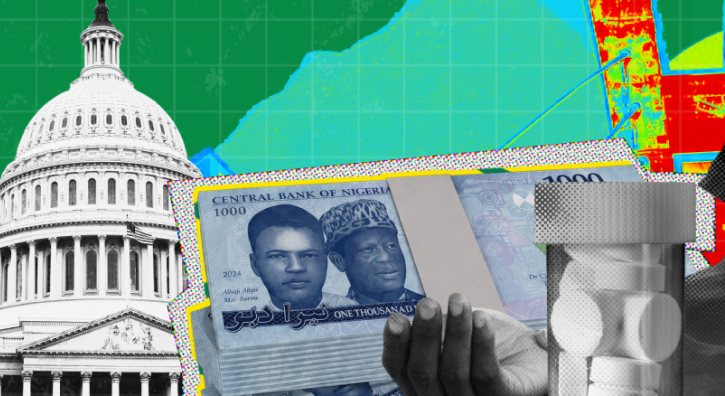
The warning signs are already visible and acute. In 2025, the Trump administration’s suspension of PEPFAR funding triggered an immediate crisis across Nigeria’s HIV response. More than 95% of PEPFAR-funded community workers received stop-work orders. Over 80 One-Stop Shops, facilities serving key populations including adolescent girls, sex workers, and men who have sex with men, faced service disruptions. In eight countries, including Nigeria, 89% of funding for community-led HIV organisations comes from bilateral donors, with less than 0.1% from domestic sources. This is the existential vulnerability of dependency. When Washington shifts its foreign policy, clinics close in Kano.
In the short term, continued dependency means that progress on HIV, malaria, and maternal health will remain fragile and reversible. Over the next decade, Nigeria risks approaching what researchers call donor transition—the point at which its lower-middle-income classification triggers the withdrawal of official development assistance—without having built the domestic financing systems to absorb the gap. The trajectory is clear: external funding is becoming less reliable, but domestic systems have not matured to replace it.
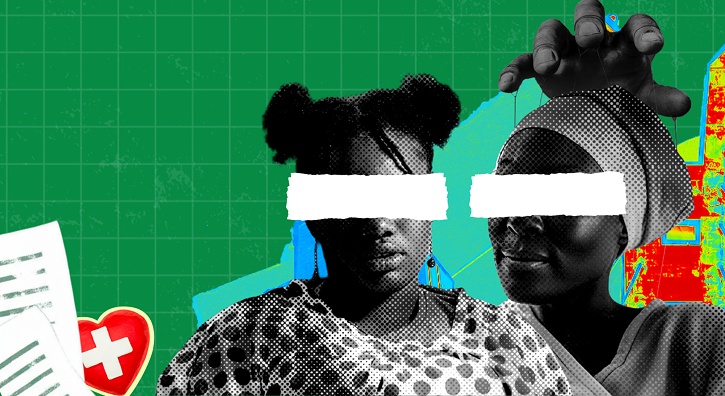
For women in rural Kebbi State who currently access antenatal care through a donor-funded facility, or for an adolescent girl in Borno accessing HIV prevention services through a partner-supported One-Stop Shop, the consequences of this structural failure are not abstract. They are life and death.
Policy Recommendations
The solutions are neither simple nor cheap. But they are knowable.
At the federal level, Nigeria must make a credible, enforceable commitment to the 15% Abuja Declaration target—not merely in budget allocation, but in the actual release of funds. The chronic gap between health budget appropriations and disbursements is arguably the single greatest structural failure in Nigeria’s health system. The federal government must also strengthen the National Health Insurance Authority as the primary vehicle for domestic health financing, with a clear mandate to expand coverage beyond formal sector workers. Critically, counterpart funding obligations to donors—a recurring point of failure—must be treated as a non-negotiable first-line expenditure, not an afterthought.
At the state level, governors must be held politically accountable for their states’ health outcomes. Subnational variation in Nigeria’s health landscape is extreme: a woman in Lagos faces fundamentally different risks and access realities than a woman in Zamfara. States must develop and implement their own health financing strategies, rather than simply waiting for federal or donor transfers. States should also build robust community health worker systems that are fully domestically funded and integrated into the civil service, ending the cycle of NGO-funded, grant-dependent community workers.
For donors themselves, the ask is structural rather than financial. Donor programmes should be designed from day one with explicit exit strategies that include government absorption plans. Technical assistance—supporting governments in planning, budgeting, and managing their own systems—should be given greater weight than direct service delivery. Reporting requirements should be rationalised and aligned across donors to reduce the administrative burden on government partners, who currently spend significant capacity producing reports for 10 donors in 10 different formats. Specifically, at least 30% of programme budgets should be allocated to systems strengthening and government capacity building.
For civil society and the private sector, the priority is accountability and innovation. Civil society organisations must deepen their role as watchdogs over both governments and donors — tracking whether funds are released, programmes are delivered, and outcomes are achieved. The private sector, which already accounts for a significant share of health service delivery, has an underutilised role in health financing through private insurance and workplace health programmes.
Conclusion
Nigeria cannot continue to build its health system on borrowed money. The PEPFAR disruption of 2025 was a warning shot, not an anomaly. The architecture of a health system that lives and dies by the decisions of foreign governments and global fund replenishment cycles is not a health system: it is a contingency plan.
The work ahead requires three things above all: domestic political will, domestic financing, and domestic accountability. Not because donors are malicious, but because sustainable health outcomes require ownership of the kind that persists after the project cycle ends, the kind that belongs to the communities it serves.
For citizens, the most powerful action is to demand accountability from elected officials at the local, state, and federal levels for health outcomes and health budgets. Ask elected officials and representatives what percentage of the state budget is allocated to health care. Ask what happened to the counterpart funds that should have unlocked donor grants. Ask why the primary health centre in your community has not had running water in three years.
For advocates, the priority is to push for transparency in both government health spending and donor programme evaluations. Nigeria needs a functioning open contracting portal for health procurement, and the political will to use it.
For policymakers, the lesson of two decades is this: donor support can accelerate what domestic systems make possible. It cannot substitute for them. The investment in those systems—in buildings, in workers, in institutions, in trust—is the work of this generation.
—
Luke Alade is TBD.