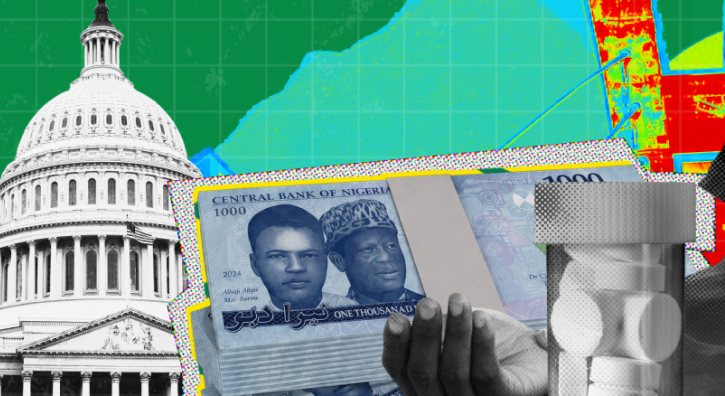



The COVID-19 pandemic and the race to develop vaccines rewarded countries with strong, proven research capabilities. It also provided a chance for Nigeria, whose Federal Vaccine Production Laboratory, Yaba, was a frontline space for Nigeria’s epidemiological capacity.
Established from the Rockefeller Yellow Fever Laboratory in 1925, it produced vaccines against smallpox (1930s), rabies (1948), and yellow fever (1952), reaching a peak of 500,000 yellow fever vaccines in 1987, before closing in 1991 for renovations and upgrades that remain unfinished. Its closure stands as a monument to years of underinvestment, shifting policy priorities, and a system that struggles to sustain alignment across institutions.
By the time COVID-19 arrived, Nigeria was no longer producing vaccines. Instead, like much of Africa, it was working to secure access within a global system where supply, timelines and priorities were largely shaped elsewhere. Still, the pandemic triggered a renewed ambition to restart local vaccine manufacturing in Nigeria, but this was not the first attempt.
In 2005, the Nigerian Government, in partnership with May & Baker Nigeria Plc, established BioVaccines Nigeria Limited (BVNL) to rebuild Nigeria’s domestic vaccine manufacturing capacity and reduce import dependence. Despite this, Nigeria still lacks local vaccine manufacturing, with BVNL remaining a “work in progress,” as the agreement broke down and was revived in 2017, before stalling due to financing gaps and political interference. In 2018, there were other attempts to revive the Yaba laboratory. That, too, was not successful.
Nigeria’s population and strategic role as West Africa’s hegemon mean that any future regional outbreak or pandemic will require a strong, effective response. It will need a system that is resilient and prepared to handle the weight of an expectant and sceptical public. But can Nigeria build the kind of system that makes it possible?
The Gap Between Agenda and Action
In 2023, the Presidential Initiative for Unlocking the Healthcare Value Chain (PVAC) was established. The existence, for the first time, of a presidency-mandated committee signalled high-level political commitment and the inclusion of vaccines, as well as drug and test manufacturing, firmly in Nigeria’s policy agenda. The PVAC has launched two strategies, established committees, and announced partnerships, in line with Nigeria’s 2021 vaccine policy, which set an expectation that local manufacturing would begin by 2026.
Regrettably, such promises with unrealistic timelines have proven to be a precursor to disappointment. Vaccine manufacturing is not a discrete project that can be delivered within a single political cycle and requires concerted buy-in across presidential transitions and leadership changes at the Ministry of Health. It necessitates sustained alignment across financing, regulation, organisational capability and market structure. That the 2021 vaccine policy target was not met is unsurprising; it does, however, highlight the level of transformation needed.
The Opportunity Cost of Failure
Nigeria carries a high burden of infectious diseases, many of which have implications beyond its borders. Outbreaks that begin locally can quickly become regional or global concerns. Lassa fever, for example, continues to affect communities annually, spreading from 20 to 34 of Nigeria’s 36 states and the Federal Capital Territory, yet Nigeria lacks a licensed vaccine.
At the same time, Nigeria records an estimated eight million births annually, each child requiring a full course of routine immunisation. With one of the highest birth cohorts in the world, and a direct and predictable demand for vaccines, Nigeria still has over 2.1 million zero-dose children: infants who have not received any routine vaccines — the highest number on the African continent. These children and the women who care for them, concentrated mostly in rural communities in Northern Nigeria, where health systems are weakest, and mothers face the greatest barriers to accessing immunisation services, will bear the sharpest consequences of a system that has not yet learned to protect its most vulnerable.
In Nigeria, where health needs are extensive and outbreaks recurrent, it is reasonable to question whether scarce public resources should be directed toward manufacturing. The answer lies not in government funding production outright, but in its role in shaping the conditions that make it viable: predictable procurement, regulatory strength, targeted risk-sharing, and coordination of actors across the value chain.
In countries where vaccine manufacturing has taken root, such as Senegal, South Africa, and India, from which Nigeria procures much of its supply, it has not been a purely government-driven endeavour. The scale, cost and uncertainty involved demand a mix of public and private participation. Vaccines are not products that can be manufactured on demand, but the outcome of a system that must function reliably over time. That system covers regulation, financing, industrial policy, scientific capability and public health delivery, and its success depends on how well these elements are aligned and sustained. The challenge, therefore, is how to build and maintain a coherent system that can deliver.
Strong Parts, Fragmented System
Nigeria has relatively strong institutions, and if they functioned well together, they would result in a strong healthcare system with a robust vaccine development structure. But they are subject to internecine turf battles and clashes over resources and influence, leaving the entire system vulnerable.
The Federal Ministry of Health provides policy direction and oversees its agencies. The National Primary Health Care Development Agency (NPHCDA) procures and delivers vaccines. The National Agency for Food and Drug Administration and Control (NAFDAC) regulates their use, while the Nigeria Centre for Disease Control and Prevention (NCDC) generates data that informs what is needed and where. Research institutions such as the National Institute for Pharmaceutical Research and Development (NIPRD) and the Nigerian Institute of Medical Research (NIMR) contribute to the development of scientific and clinical research capacity. Local pharmaceutical companies are exploring entering the vaccine manufacturing market in partnership with global firms. Meanwhile, international partners are engaged and willing to support. On paper, all the necessary components appear to be in place.
Sadly, in practice, the system is fragmented. Responsibilities overlap, coordination is uneven, and decision-making can be slow. We see this in basic research, when clinical trials or other scientific materials are stuck at the port of entry with no clarity on where the bottleneck exists or accountability for resolving such situations. There is a tendency to focus on creating new structures rather than ensuring that existing ones are aligned and function effectively. Vaccine manufacturing cannot be built with such misalignment.
It is a complex undertaking within any health system, requiring long-term financing, credible and trusted regulatory systems, a skilled and sustained workforce, reliable demand, and coordination across sectors that do not always naturally align. Vaccine manufacturing requires discipline, consistency and a level of institutional coherence that is often difficult to achieve.
If these foundations are not addressed, the consequences will accumulate over time. In the short term, Nigeria will continue to depend on imported vaccines. During periods of stability, this dependence may not appear problematic. But mass outbreaks, as we saw in 2020, do not occur under stable conditions. When global supply is constrained, countries, especially those in Africa, which import more than 70% of the continent’s medicines and lack production capacity, will be faced with limited options.
In the medium term, Nigeria risks missing a critical window of opportunity. There is currently significant global momentum for vaccine manufacturing in Africa. The European Union, for instance, has partnered directly with Nigeria to boost local manufacturing in the health sector, supported by increased political attention and rising financing.
This momentum could also improve investment interest in other parts of the health ecosystem and significantly improve Nigeria’s capacity to leverage its weight in the regional and continental economy. However, this momentum is not evenly distributed. Countries that can offer clarity through strong regulatory systems, coordinated policies, and predictable markets are moving ahead more quickly. Nigeria has the potential to be part of this group, but that outcome is not guaranteed.
Over time, the greater risk is that Nigeria remains engaged in discussions and present in partnerships, but unable to translate that engagement into sustained domestic capacity. Perhaps, most importantly, repeated gaps between ambition and delivery risk eroding confidence not only among external partners and investors, but also among Nigerians.
Alignment before Ambition
What would it take to change this trajectory? The answer is to make existing systems work more effectively, starting with clarity. There must be a clear locus of responsibility for driving the vaccine manufacturing agenda. Coordination cannot remain a shared responsibility without ownership. Someone, or some institution, must be accountable for ensuring that the different parts of the system are aligned and moving in the same direction. For example, Ghana has set up a National Vaccine Institute with a dedicated institutional anchor for vaccine development and manufacturing. Nigeria’s PVAC is a time-bound initiative, but within its short lifespan, it has already made tangible progress in coordinating across ministries, mobilising investment and aligning stakeholders around a shared vision for local production. One positive step would be for PVAC to evolve into a more permanent institutional platform to sustain and consolidate these gains.
It also requires a more honest engagement with the economics of vaccine manufacturing. Vaccines are expensive to develop and produce, require long timelines, and operate within tightly regulated environments. They cannot be sustained without a predictable and credible market. If Nigeria is serious about local manufacturing, it must be willing to procure locally produced vaccines once they meet established quality standards. Without such commitments, private-sector participation will remain cautious, and investment will remain limited. Nigeria’s experience with the Dangote Refinery offers a useful parallel. The federal government’s crude-for-naira agreement with NNPC, a commitment to supply domestic crude in local currency to guarantee the refinery’s operations, illustrates exactly the kind of structured market commitment that vaccine manufacturing will also require. A credible government pledge to purchase locally produced output that meets quality standards reduces the risk for private investors and incentivises local actors.
At the same time, it is important to distinguish between different types of financing. Financing for vaccine procurement, which involves purchasing vaccines for use, and financing for manufacturing, which involves building and sustaining production capacity, serve different purposes. When these are conflated, it creates confusion, weakens accountability and undermines strategic planning. Both are necessary, but they must be structured and managed differently.
Regulation is another area that needs a shift in perspective. A strong regulatory system is a prerequisite. Without it, vaccines cannot move through clinical trials efficiently, be approved in a timely manner, or be trusted by either domestic or international stakeholders. NAFDAC has a solid foundation—it is one of only four regulatory agencies in Africa to achieve WHO Maturity Level 3 status, a recognition it first earned in 2022 and retained after re-benchmarking in 2024—but it needs to be further strengthened. This will go a long way in securing citizen buy-in for actual vaccine usage compliance.
Equally important is the question of human capital. Infrastructure often receives the most attention because it is visible and politically tangible. But facilities alone do not produce vaccines; people do. Scientists, regulators, technicians and quality assurance specialists form the backbone of any vaccine ecosystem. Developing this workforce requires sustained investment, and retaining it requires creating environments in which expertise can be applied and valued. Unfortunately, our current science curriculum is not yet aligned with the skills and competencies required for vaccine development and manufacturing. Without a clear talent pipeline, companies are not incentivised to invest in the long-term structures required for vaccine development. Without this, physical infrastructure risks being underutilised.
Finally, Nigeria must be more strategic in its approach to vaccine manufacturing. Attempting to produce every vaccine is neither necessary nor feasible. A more focused approach, such as starting with fill-and-finish for established vaccines, would enable more realistic, tractable progress. This allows capabilities to be built incrementally, aligned with existing institutional and market conditions and expanded over time as system alignment and capacity improve.
The Big Picture
Vaccine manufacturing is not solely the government’s responsibility. Citizens have a role in demanding accountability and engaging with how health priorities are set and funded. Civil society organisations can track progress and ensure that diverse perspectives are reflected in policy discussions. The private sector must engage in ways that prioritise long-term capacity over short-term gain. Academic and research institutions must generate evidence that informs decision-making and supports implementation.
Nigeria’s vaccine ambitions have been marked by cycles of urgency and abandonment. The Yaba laboratory closed in 1991 with promises of an upgrade that never came. BioVaccines was incorporated in 2005, stalled, revived in 2017, and still has not produced a single dose. Each time a crisis arrives, the conversation restarts with the same sense of urgency, the same commitments, and, eventually, the same fade into inaction once the headlines move on. Outbreaks might once have seemed distant, but recent incidents have been close to home and the threats real. Nigeria alone has seen Ebola in 2014, Lassa fever year after year, COVID-19 in 2020, mpox in 2022, to name a few.
What these outbreaks have made clear, repeatedly, is that vaccine security cannot be built in the middle of an emergency. It requires the kind of sustained, coordinated investment in institutions, regulation, manufacturing, and workforce that outlasts any single crisis. The question Nigeria faces is not whether it has learned this lesson, but whether it is finally prepared to act on it before the next outbreak forces the conversation again.
Nigeria’s ambition to produce vaccines locally is not new. Right now, there appears to be renewed political attention and global momentum behind it. Whether this moment translates into sustained capacity will depend on the ability to strengthen, align and discipline the systems that already exist. The political cycle is too short for any single government to deliver, but the benefits of this work are long and transformative. It will be felt by generations who will no longer depend on inequitable global vaccine supply chains. Each administration must therefore see its role as part of a larger effort that will reshape the country long after any one government has passed. Each Nigerian must see it as a larger effort to protect and preserve future generations yet unborn.
—
Oyeronke Oyebanji is the Head of Lassa Engagement at the Coalition for Epidemic Preparedness Innovations (CEPI), where she leads country and regional collaborations to accelerate Lassa vaccine development. With nearly ten years of global health experience. She has led and contributed to significant initiatives, including her role as an Analyst within the COVAX facility, helping to deliver 2 billion COVID-19 vaccine doses globally. She has a doctorate in public health from the London School of Hygiene and Tropical Medicine.