

A Sector in Transition
Nigeria’s mental health framework is undergoing its most significant transformation in decades. The 2023 National Mental Health Act replaced the 1958 Lunacy Act, shifting the country from a colonial-era detention model to a rights-based approach that prohibits forced treatment and imposes severe penalties for abuse. Yet while the legal framework has been modernised, the physical and operational infrastructure required to deliver mental healthcare has changed far more slowly. Integrated mental health services remain scarce in state health facilities, psychotropic medicines are often unavailable at the local level, and national systems for monitoring mental health outcomes remain underdeveloped. The result is a widening gap between what the law promises and what millions of Nigerians can access in practice.
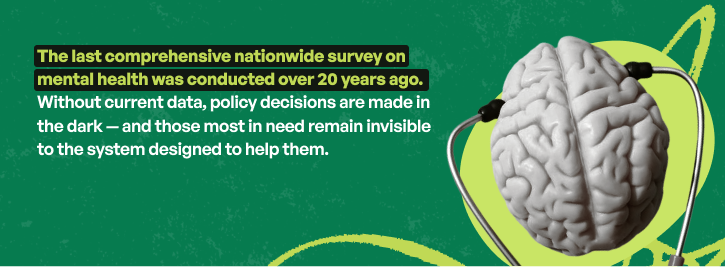
One of the most significant barriers to effective mental health policy in Nigeria is the absence of reliable and up-to-date data. The last comprehensive nationwide survey was conducted over 20 years ago, making it nearly impossible to address current realities with precision. Without accurate data on prevalence, treatment gaps, and service needs, planning remains largely reactive rather than strategic.
The lack of accurate data is also compounded by mental health being treated in isolation from broader disability discussions, a critical failure, given that mental health conditions are the leading cause of disability worldwide. This detachment means mental health is routinely excluded from accessibility and disability conversations. This absence shows up in institutional representation. The flagship National Commission for Persons with Disabilities, established to advance the rights and welfare of persons with disabilities, currently has no board member with lived experience of a mental health condition.
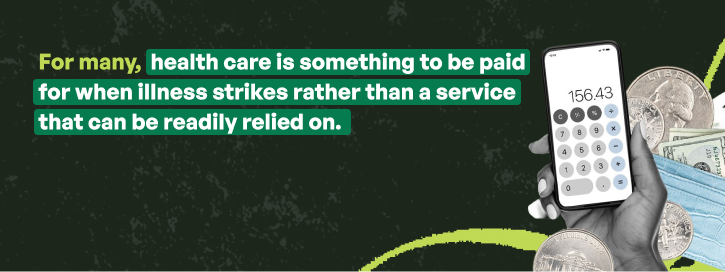
Financing also remains one of the system’s greatest weaknesses. Historically, mental health has received less than 5% of the national health budget, a sector already chronically underfunded. This lack of investment, coupled with the continued migration of health professionals, has left Nigeria with just 0.86 mental health workers per 100,000 people, far below the World Health Organisation’s (WHO) global median is 13 specialised mental health workers per 100,000 population.
The continued loss of mental health professionals is driven by a combination of poor remuneration, deteriorating hospital infrastructure, and limited opportunities for career advancement, prompting many specialists to seek employment in more supportive healthcare systems abroad. The resulting workforce shortage has significantly constrained access to care, leaving more than 80 per cent of people who need mental health support without access to formal care.
The System Beneath the Surface
Understanding Nigeria’s mental health landscape requires looking beyond policy to how care is actually delivered. At present, the system remains heavily centralised, with specialised services concentrated in nine federal neuropsychiatric hospitals nationwide. Leaving 28 states, out of Nigeria’s 36 states and the Federal Capital Territory (FCT), with no federal psychiatric presence.
Located almost exclusively in major urban centres, these hospitals provide critical care but are unable to serve the grassroots. For individuals outside these few metropolitan hubs, who must often cross multiple state lines for a single appointment, seeking professional help is not just a medical choice; it is a logistical nightmare involving long-distance travel, prohibitive costs, and significant delays. Primary Healthcare Centres (PHCs), which should serve as the foundation of a decentralised behavioural health system, are not equipped to fill this gap.
any PHCs lack trained personnel to identify and manage mental health conditions, have limited access to essential psychotropic medications, and operate without clear referral pathways. As a result, early-stage conditions frequently go undetected. The National Mental Health Act addresses this by mandating the integration of mental health services into primary healthcare levels through training PHC workers to provide basic care and conduct mental health screenings during routine health checks. However, these regulations are yet to be executed, leaving many to rely on informal systems—family networks, traditional healers, and religious institutions— which often act as the first point of contact for individuals experiencing psychological distress. Taken together, these dynamics reveal a system that is not simply under-resourced, but skewed toward metropolitan areas, reactive where it should be preventive, and inaccessible to formal medical support.
Inequality in Access and Experience
These systemic failures are not felt equally. They mirror deep inequalities in age, gender, socioeconomic status, and geography. While the urban-rural divide determines physical access to care, stigma and cultural expectations determine who feels safe enough to seek help.
This is especially true for young people. Half of all mental health conditions begin by age 14, yet Nigeria — home to one of the world’s youngest populations — offers its youth little support. Despite our celebrated communal culture, 12.7% of African adolescents experience chronic loneliness, more than double the rate in Europe. For many young Nigerians, this isolation is worsened by economic pressure, academic stress, and a digital environment that promises connection but often delivers comparison.
National assessments by UNICEF indicate that 85% of young Nigerians feel greater pressure to succeed than previous generations—the highest percentage globally across 21 surveyed countries. Even as 1 in 6 reports feeling anxious or depressed, the system remains silent. Mental health is still missing from school curricula, and on-campus support is virtually non-existent. This institutional silence does more than make help-seeking difficult — it actively discourages it. In a society that continues to treat isolation and struggle as personal failings rather than systemic challenges, many young people are left to suffer alone.
Socioeconomic status further compounds these disparities, as individuals with higher incomes are more likely to access private care, while those with limited financial resources rely on overstretched public services or informal support systems.
For women, mental health is often weaponised. Between the rise in gender-based violence (GBV) and intense social expectations, the psychological strain is immense, yet a diagnosis can be used to threaten a woman’s marriage or her agency as a mother. This is compounded by a dangerous colonial relic: the criminalisation of attempted suicide.
While the United Kingdom abolished this law in 1961, just one year after Nigeria gained independence, Nigeria continues to criminalise attempted suicide, imposing a prison sentence of up to one year. This approach not only penalises individuals in distress but also undermines public health objectives. Evidence suggests that suicide rates are higher in countries where attempted suicide is criminalised, with women often experiencing the most severe consequences.
Crucially, this law creates a data blackout. To avoid the ex-convict label and legal sanction, families and hospitals do not report these incidents, being forced to hide the truth. This ensures a critical public health challenge remains undercounted and invisible, making it impossible to fund the gender-specific support women need. By treating a crisis as a crime, we are not just blocking help-seeking; we are making sure the most traumatised among us stay in the shadows.

The Cost of a Fragmented System
he consequences of these gaps extend beyond individual well-being, affecting households, communities, and the broader economy.
At the economic level, untreated mental health conditions reduce productivity, increase absenteeism, and limit workforce participation. Globally, depression and anxiety alone cost the international economy US$1 trillion annually in lost productivity. Nigeria’s youthful population projected to remain among the youngest in the world through 2050, with a massive cohort entering the workforce — makes these costs especially devastating for our future. We are sitting on a demographic and economic time bomb: a mentally drained generation, meant to power national growth, is instead struggling to function.
At the household level, in the absence of accessible formal services, the burden of care falls on families. Relatives provide long-term support, often at the cost of their own income and educational opportunities. This leads to sustained financial strain and limited savings, as resources meant for long-term stability are frequently diverted to cover the high out-of-pocket costs of emergency treatment and medication.
At the health system level, delayed care increases pressure on limited specialist services. Hospitals and psychiatric facilities are required to manage cases that could have been addressed earlier in the community. This not only increases costs but also reduces system efficiency.
There are also broader social implications. A critical systemic failure is that mental health is not integrated into national health surveillance. Unlike infectious diseases such as typhoid or cholera, which automatically trigger the Integrated Disease Surveillance and Response (IDSR) system and mobilise resources, spikes in psychological distress go largely untracked. This leaves the government and humanitarian actors unable to detect mental health outbreaks, direct resources to high-need areas, or respond effectively to trauma linked to conflict, flooding, or economic shocks.
During the 2025 World Mental Health Day commemorations, the Coordinating Minister of Health, Prof. Muhammad Pate, publicly acknowledged this gap and called for urgent integration of mental health into emergency care. Yet, despite this high-level recognition, meaningful action remains stalled. Mental health continues to sit outside national surveillance systems, meaning we still cannot detect regional trauma the way we track physical disease outbreaks. A system blind to these spikes stays dangerously fragile — lacking the real-time data needed to prevent crisis-level consequences
From Policy to Practice: What Needs to Change
Addressing these challenges requires a shift from policy commitments to operational change.
At the federal level, the priority must shift from legislation to implementation. The National Mental Health Act needs dedicated funding, clear guidelines, and strong accountability mechanisms. Immediate steps include: establishing the stipulated Department of Mental Health Services within the Federal Ministry of Health to operationalise the Act; creating the mandated Mental Health Fund to inject much-needed financing into the sector; publishing the Act’s roadmap, which civil society actors like Nigerian Mental Health (NMH) helped create to provide a framework for implementation; and establishing a comprehensive, costed national mental health action plan.
Furthermore, transparent monitoring and reporting systems are essential. Without reliable data on rollout progress across states, accountability will remain impossible. The National Assembly should also pass the National Suicide Prevention Bill that would decriminalise attempted suicide, which NMH, working with the Nigerian Suicide Prevention Advocacy Working Group, helped introduce in the legislature in 2025. Finally, expanding mental health coverage under the National Health Insurance Authority (NHIA) is critical to reducing catastrophic out-of-pocket costs and making care truly accessible.
At the state level, integration and domestication are essential; currently, the 2023 Act has been domesticated in Lagos, Ekiti, Kaduna, and Ogun states, leaving the majority of the country without a localised legal mandate for implementation. Mental health must be embedded within state health plans rather than treated as a standalone speciality, ensuring that services are accessible in both urban and rural areas.
At the local level, PHCs provide the most viable pathway for scale. Using tools such as the WHO Mental Health Gap Action Programme (mhGAP) Intervention Guide, a version of which has been domesticated in Nigeria, non-specialist health workers can be trained to identify and manage common mental health conditions. Task-shifting, where community health workers provide basic psychosocial support, can significantly expand access while reducing pressure on specialist services.
Financing reforms are also critical. Today, most Nigerians pay for mental health care out of pocket. We must move toward pooled funding—a system that collects money from taxes, insurance contributions, and other sources into a shared national fund. This spreads risk across the population so that the healthy and wealthier help cover the costs for those who need support, rather than individuals paying the full cost at the point of care. This must be combined with strategic purchasing, where the pooled money is used deliberately to buy the most effective services at reasonable cost.
However, it is not enough to simply change how we pay. We must also change what we are paying for. Today, nearly 100% of federal government funding for mental health is directed toward biomedical interventions focused on hospital-based treatment and medication. To truly meet the scale of the crisis, Nigeria must begin funding psychosocial support—community-based initiatives such as peer support groups, counselling services, school-based programmes, and culturally relevant wellness approaches that treat mental health as a social and emotional reality, not just a medical condition.
Beyond the health sector, a broader ecosystem approach is required. Employers can introduce workplace mental health programmes, schools can integrate psychosocial support into student services and the curriculum, and community organisations can promote mental health literacy and reduce stigma.
Digital tools also present a unique opportunity to leapfrog traditional infrastructure barriers. Tele-mental health services, mobile applications, and digital screening tools can expand reach, particularly in underserved areas where specialists are absent. We are already seeing this shift within the NMH network, where a growing segment of member organisations is now dedicated to health-tech startups. Innovators like SereniMind, Nexavue Africa, and Mindwellnest are using AI-driven diagnostics and remote counselling to bridge the treatment gap and assist mood regulation. However, these digital solutions must be integrated into the broader public health system to ensure quality and continuity of care. Technology is a powerful enabler, but its success depends on a regulated framework that protects patient data and maintains clinical standards.
Reframing Mental Health as a Public Good
Nigeria has made meaningful progress in recognising mental health as a rights-based issue. The challenge now is to translate this recognition into systems that deliver care at scale. Doing this successfully requires a shift in perspective.
Mental health must be understood not as a niche or specialised issue, but as a core component of public health, economic development, disability justice, and social stability. Improving mental health outcomes is not only about treating illness but also about enabling individuals to participate fully in society, contribute productively, and maintain social connections. It is about building systems that respond early, reduce suffering, and promote resilience.
Nigeria now has the legal and policy foundation for progress. The next phase will depend on implementation: whether services can reach communities, whether care can be made affordable, and whether stigma can be reduced. Ultimately, the success of Nigeria’s mental health system will not be measured by the laws it passes, but by the lives it improves.
Until mental health is properly mainstreamed, true disability justice will remain an unfulfilled promise, with accessibility continuing to focus only on what we can see, while leaving the invisible majority behind.
—
Chime Asonye is a public policy advisor and mental health advocate. Currently, he serves as the Founder of Nigerian Mental Health, the country’s largest multidisciplinary community of practitioners, comprising over 50+ mental health-focused organisations that work to advance policy advocacy, research, wellness programming, and disability justice. His organisation played a central role in coordinating advocacy efforts that helped pass Nigeria’s National Mental Health Act in December 2022, the country’s first human rights-focused mental health reform since independence. His thought leadership on psychosocial issues is featured in Harvard Africa Policy Review, CNBC Africa, and the World Economic Forum, among others.