• Background 

    In emergency healthcare, the most dangerous assumption is that availability equals access. In reality, survival is rarely determined by whether medical supplies exist within a health system, but by whether the system can coordinate their delivery, identify where care can actually be administered, and move patients quickly through a fragmented network of providers. In Nigeria and many similar contexts, emergencies are often not just clinical events but coordination failures measured in minutes.

    Across global health literature, delays in accessing appropriate care have consistently been identified as a major contributor to preventable mortality in low-resource settings, particularly in maternal and trauma-related emergencies, often emerging from fragmented procurement systems, weak real-time visibility of hospital readiness, and the absence of structured emergency routing between facilities.

    It is within this gap between presence and access that lives are lost.

    Where Emergency Systems Break First 

    The first time the fragility of emergency systems becomes visible is rarely in data; it is in experience. 

    One of the earliest moments that shaped my founding perspective came during a field trip in Kaduna, Northern Nigeria. A young woman, Aisha, had just delivered a baby but developed severe postpartum haemorrhage. Blood was urgently required. Her family moved between facilities searching for a unit that could respond. The blood existed somewhere in the system, but there was no coordinated visibility of where it was available or how quickly it could be accessed. By the time compatibility and availability were resolved, the delay had already become irreversible, and Aisha lost her life. 

    Years later, a second, more personal experience reinforced the same structural truth. During childbirth in a highly resourced healthcare system outside Nigeria, my experience was still difficult and high-risk, but fundamentally different in one respect: coordination was immediate, protocols were clear, and escalation pathways were already mapped. The contrast exposed a stark inequality, not necessarily in medical knowledge, but in system readiness.

    These two experiences became foundational to a single question that stayed with me: why should survival depend so heavily on where an emergency happens? 

    This was not simply a shortage problem. It was a systems problem, defined by fragmented information, delayed decision-making, and a lack of coordinated emergency response pathways. It also featured a lack of considered investment and structure within Nigeria’s broader emergency response ecosystem. In 2016, LifeBank was founded to address this gap by building the infrastructure required to make lifesaving medical supplies visible, accessible, and deliverable in real time. 
    When Systems Are Fragmented, Emergencies Fail 

    Nigeria’s emergency healthcare challenges are often described in terms of shortages and lack. You hear patients and their loved ones say things like: 

    “…they said there is no blood.” 

    “…the hospital said oxygen had finished,” 

    “…we were told they don’t have antivenom.” 

    In many cases, these are accounts of what families were told at the point of care. 

    But that is not the full story. 

    In many situations, these supplies do exist within the broader system. The challenge is that they are not always visible or accessible when needed most. As a result, families and even health workers are left searching, calling, and moving from one facility to another, trying to find what should have been reachable in minutes. 

    Emergency care fails most critically at the intersection of coordination and time. Facilities may have capacity, but not visibility into each other’s readiness. Supplies may exist, but not in the location where they are urgently required. Decisions are often made without real-time data on hospital capability, leading to avoidable delays. 

    Global evidence on emergency care systems reinforces this. Studies on trauma and obstetric mortality consistently show that delays in receiving appropriate care are more strongly associated with system inefficiencies than with absolute resource absence. In other words, emergencies are often not supply failures; they are system routing failures. 

    In addition to coordination gaps, three other structural constraints deepen the problem. First is affordability. Many healthcare facilities operate under liquidity constraints that prevent the timely procurement of essential emergency supplies. Even when demand is urgent, financial barriers delay procurement decisions, introducing avoidable risk into time-sensitive care. 

    Second is infrastructure readiness, including equipment downtime. Across many facilities, critical machines required for emergency care are non-functional due to lack of maintenance support or access to biomedical engineers. This creates silent failures within the system; capacity that appears available on paper but is non-operational in practice.

    Third is the safety and quality of medical supplies, particularly blood. Weak screening systems, reliance on rapid diagnostic tests with limited sensitivity, and gaps in traceability increase the risk of transfusion-transmissible infections and compromised care. While some health systems, supported by stronger government policy and regulatory oversight, are improving screening and transfusion safety, others still face significant gaps, which means that in emergency situations, the safety of available blood cannot always be guaranteed. In such moments, ensuring both access and safety becomes critical, because unsafe transfusion can create additional risk rather than resolve the emergency.

    Together, these constraints create a layered failure: visibility, affordability, readiness, and safety all interact to determine whether a patient survives an emergency event.
    Plugging the gap in Emergency Healthcare Infrastructure 

    At LifeBank, we operate at the intersection of logistics, technology, and healthcare systems design. We are constantly building systems to reduce the time between an emergency need and a clinical response at the healthcare centres in the communities we serve.

    At our core, we focus on three things: making essential supplies accessible in time, ensuring they are safe, and helping reduce the cost barriers that slow emergency care.

    Strengthening Access to Emergency Supplies: Through our medical supplies marketplace (Nerve), LifeBank enables healthcare centres to access and coordinate the delivery of essential emergency supplies, including blood, oxygen, and antivenom. We recently introduced antivenom access on our marketplace to address one of the most persistent challenges in emergency care: delays in treatment for snakebite cases. In one case in Ibadan, a patient was moved between multiple hospitals over an extended period in search of antivenom, which ultimately took about 13 hours to locate. In a similar case in Abuja, a widely reported incident involving a social media personality, Ifunanya, followed the same pattern, with several facilities visited before treatment was eventually found, though unfortunately, after critical delays. In both situations, what slowed the response was not a lack of effort by healthcare workers, but uncertainty about where treatment was available and when.

    Strengthening access really means this: in an emergency, help is not something people have to search for under pressure.

    Building Safe, Proactive Emergency Systems: Access alone is not enough without safety assurance, and we are deeply aware of this and continuously working to improve through innovation and partnerships. LifeBank’s SmartBank system strengthens blood safety through structured screening and traceability, reducing the risks associated with unsafe transfusions and building greater confidence in emergency blood systems. We have seen successful implementation in Kenya and Sierra Leone through partnerships and collaboration, and we are actively working to replicate and deepen these outcomes in Nigeria by strengthening the reliability and proactiveness of blood safety systems, particularly in emergency care settings.

    Addressing Affordability Constraints: Emergency care is not only constrained by physical access, but also by financial liquidity. In many high-pressure situations, facilities are clinically ready to act, but a temporary cash flow shortage can delay the decision to procure urgent supplies. When a life is on the line, the time spent navigating administrative payment approvals is time the patient does not have.

    We offer flexible payment terms, providing healthcare centres with a functional credit cushion that allows them to procure life-saving supplies immediately and defer payment for 2 to 6 weeks. We also practice a community solidarity model that leverages broader system support and resources to ensure that even the most vulnerable facilities, serving the most underserved communities, are not cut off from essential supplies during a crisis. Together, these approaches ensure that the “ability to pay” at the point of care never becomes a barrier to the “ability to save.” By decoupling financial constraints from emergency response, we create a more resilient network in which care remains uninterrupted, regardless of a facility’s immediate financial position.

    Strengthening Equipment Readiness: Another quiet but critical challenge in emergency care is equipment failure. The COVID-19 pandemic in Nigeria exposed this reality, with reports highlighting gaps in critical care capacity, including limited access to functional ventilators. These gaps make one thing clear: emergency care also depends on whether the equipment needed to deliver that care is actually working when it is needed most.

    Through our Quip platform, we connect hospitals with verified biomedical engineers who can quickly service and repair critical medical equipment. Alongside this, training programmes like Orange Army, a Quip initiative that supports and trains female engineers, are helping to build a stronger pool of technical talent that keeps healthcare systems functioning.
    The Citizen Layer: First Response 

    Beyond facility-based systems, emergency outcomes are also shaped by decisions made at the citizen level. In many emergency situations, bystanders, loved ones, and even first responders often lack clear visibility into which healthcare facilities are actually equipped to handle specific emergencies. The reality is that not all hospitals are fully prepared for emergencies. Some are not equipped for trauma care, others cannot manage cardiac arrest, obstetric emergencies, or paediatric crises. Yet in moments of urgency, patients are often taken to the nearest hospital rather than the most appropriate one. This mismatch leads to repeated transfers, confusion, and avoidable delays.

    We saw this reality again in a case involving a road traffic accident victim and the CTO of Bumpa. Emergency responders moved between multiple hospitals without clear knowledge of which facility could provide immediate trauma care. Each transfer added more delay, and in emergency medicine, time lost is often irreversible. Sadly, this is not an isolated case. Situations like this happen far too often, where uncertainty at the point of decision becomes a silent contributor to poor outcomes. 

    This gap led to the development of First Response, a platform built around the idea of citizens as the decentralised first mile of healthcare. In emergencies, the moments before professional help arrives are often the most critical, yet communities are frequently left without the information or tools needed to act effectively. By equipping bystanders and first responders with real-time information, First Response helps bridge the gap between the onset of an emergency and access to appropriate care.

    The platform enables faster decision-making by providing real-time hospital readiness mapping, GPS-based navigation, and emergency-type matching to identify the right facility for each situation. It also supports coordination between ambulances, volunteers, and healthcare providers, while providing immediate guidance to bystanders so that life-saving actions can begin before formal emergency services arrive.

    Moving from Reactive to Predictive Emergency Systems 

    The future of emergency care cannot remain reactive. It has to be about anticipating needs before they become crises.

    In practice, this means building systems that help healthcare providers see what is coming, not just respond to what has already happened. It means using data more intelligently across different parts of the health system, from oxygen demand to blood availability, and understanding which hospitals are actually ready to respond in real time.

    When these layers come together—supply, logistics, and real-time visibility—emergency care becomes less about scrambling in the moment and more about being prepared ahead of time. It creates a system where readiness is built in, not improvised under pressure.

    Policy Recommendations 

    At the federal level, the government should establish a National Emergency Care Coordination Centre with real-time visibility across hospital readiness, blood bank availability, and ambulance deployment. The National Blood Transfusion Service must be adequately funded. A dedicated emergency care budget line would provide predictable funding.

    At the state level, each state should publish an Emergency Care Readiness Plan to map hospital capabilities and establish inter-facility transfer protocols. At the local level, primary healthcare centres should be equipped as stabilisation points with clear escalation pathways.

    Civil society, the private sector, and technology innovators have demonstrated that the tools exist. The challenge is scaling these through regulatory frameworks, public-private partnerships, and sustained investment. Citizens should know their nearest emergency-ready facility and demand that governments publish emergency care readiness plans. By creating clear regulatory frameworks that allow private infrastructure engines to securely plug their real-time data into state and national command centres, we can scale these solutions rapidly.
    Conclusion 

    Emergency care outcomes are not only determined by the availability of medical supplies but also by how well a system is designed to respond when every minute counts. When coordination breaks down, when readiness is unclear, or when information is missing, even available resources can become out of reach. These gaps are what turn treatable situations into avoidable loss. 

    LifeBank’s work sits within this reality, building the infrastructure that helps reduce the delay between emergency need and response, and strengthening the connections that allow healthcare systems to function under pressure. We will continue to innovate to ensure that no one loses their life due to a lack of access to safe, affordable, and timely medical supplies. 

    — 

  • Written by: Dr Adam Abdullahi

    In early 2020, as SARS-CoV-2 spread across continents, overwhelming even well-resourced health systems in Europe and North America, Nigeria faced a defining question: could it build the capacity to detect and respond to a major global health security threat in real time?

    For many observers, the answer seemed uncertain. Despite prior experience with Ebola, COVID-19 presented a different scale of challenge: simultaneous national spread, prolonged disruption, and the need for sustained coordination across institutions and levels of government. The response that followed demonstrated something important and often underappreciated.

    Within weeks, Nigeria began scaling the core components of epidemic response. Diagnostic laboratories expanded across geopolitical zones. Surveillance systems were activated nationwide. Data reporting improved. Scientists, clinicians, and public health officials worked with a level of coordination rarely seen before. Under the leadership of the Nigeria Centre for Disease Control (NCDC) and the Federal Ministry of Health, the country assembled a team in its emergency operations centre, including key units focused on challenges ranging from risk communications to diagnostic capacity.

    By mid-2021, the laboratory network had expanded from fewer than five testing centres to over 140 across all six geopolitical zones, millions of COVID-19 tests had been conducted, and sequencing capacity, an advanced capability that remains beyond reach for many countries with comparable resource constraints, was developed, representing a functional epidemic response architecture spanning testing, reporting, emergency coordination, and genomic sequencing to track viral evolution. This response positioned Nigeria among Africa’s leaders in pandemic management and demonstrated that Nigeria possessed scientific talent, institutional leadership when aligned and empowered, and the ability to mobilise rapidly in moments of crisis.

    But this is only part of the story. Much of this capacity was built under emergency conditions, driven by urgency, supported by external funding, and sustained by political attention that is difficult to maintain outside a crisis. As case numbers declined, a familiar pattern began to re-emerge. Systems slowed, and momentum weakened, as a system built for crisis was not fully converted into one built for prevention. That tension between what Nigeria can build during a crisis and what it can sustain afterwards defines the country’s epidemic preparedness challenge.

    Precedence and Diagnoses

    Recent outbreaks illustrate this with clarity. Recurrent Lassa fever outbreaks continue to expose uneven response capacity across states, including in places like Bauchi, where early detection remains limited. Similarly, emerging research on mpox transmission in urban Nigeria suggests that silent circulation may be occurring more widely than formal case reports indicate, with exposure in individuals never formally diagnosed.

    These are not failures of science, but of detection systems. Epidemics do not always announce themselves. Some spread quietly through gaps in detection, surveillance, and trust. Yet between outbreaks, prevention consistently loses to short-term priorities that carry greater political appeal but limited long-term value. As a result, Nigeria remains caught in a reactive cycle: respond, recover, and reset without fully building a system that endures. The question is no longer whether Nigeria can respond to epidemics; it has shown that it can, but whether it can build systems that function before crises begin.

    Doing this requires recognising epidemic preparedness work not only as a technical problem, but also as a political and governance problem. Epidemic preparedness depends on whether prevention is treated as a core government function, equivalent in importance to maintaining roads, providing electricity or education. It is not a single-institution function; it is a system, and over the past decade, it has developed credible technical capabilities.

    Identifying Stress Points

    State ministries of health carry much of the operational burden. Primary health care centres (PHCs), often under-resourced, serve as frontline detection points. Community health workers, embedded and trusted, are frequently the first to recognise unusual patterns of illness. Research institutions and laboratories provide critical scientific capacity, as demonstrated during COVID-19 through genomic surveillance. Beyond formal institutions, epidemic response depends on trust. Faith-based organisations, civil society, and the media influence how health information is understood and acted upon. During outbreaks, trust in these actors can determine whether public health measures are followed or resisted.

    The challenge is not the absence of capacity, but fragmentation. Coordination across federal, state, and local levels remains uneven. While international partners have helped strengthen these systems, they have also created dependencies where key components of preparedness rely on external funding cycles rather than domestic investment. As a result, preparedness exists in pockets, not as a cohesive system.

    Nigeria’s epidemic risk is increasing, shaped by structural changes already underway. Rapid population growth, urbanisation, and the expansion of informal settlements create environments where infectious diseases spread quickly. Climate variability is altering patterns of disease emergence, increasing risks of outbreaks such as cholera and vector-borne infections. At the same time, closer human–animal interaction raises the likelihood of zoonotic spillover. These dynamics suggest that Nigeria is entering a period where outbreaks may become more frequent, more complex, and more difficult to contain.

    Recent work on mpox highlights both risk and opportunity. Serological evidence suggests exposure to orthopoxviruses may be more widespread than reported case numbers indicate, pointing to ongoing low-level transmission that remains undetected. Similarly, Lassa fever response efforts demonstrate that early detection dramatically improves outcomes. Cases identified quickly are more manageable, with shorter transmission chains and reduced mortality.

    From an opportunity standpoint, a large, young population represents a potential public health workforce. Urban systems offer opportunities for scalable interventions. Expanding research capacity positions Nigeria to lead in understanding emerging infectious threats. The implication is straightforward: the problem is not simply the presence of pathogens, but the reach and sensitivity of detection systems. The solution is achievable; it requires investment in reach, not new science. Without sustained investment, the consequences are predictable. In the short term, delayed detection can accelerate transmission, increase emergency response costs, and fuel misinformation. In the long term, underinvestment risks eroding laboratory capacity, driving the loss of skilled personnel, and weakening the surveillance systems needed to identify and contain future threats.

    These risks are not evenly distributed either. Rural communities face delayed detection and limited access to care. Urban populations face rapid transmission risks. Women, as primary caregivers and the majority of community health workers, bear disproportionate burdens during outbreaks, facing increased care responsibilities and disrupted access to maternal health services. Young people, who constitute over 60% of the population, face both direct health risks and broader socio-economic consequences, including school closures, disrupted livelihoods, and economic scarring. If current patterns persist, Nigeria will face not isolated epidemics but overlapping and recurring syndemics — multiple disease outbreaks within already strained systems.

    The Architecture of Actors

    Addressing these requires a shift from reactive response to sustained prevention. This shift is not abstract thinking. Consider early detection: a suspected Lassa fever case in rural Plateau State may currently take weeks to confirm. With investment, it could be diagnosed within days, limiting the spread, reducing mortality, and reducing economic costs. With geographic reach, diagnostics are currently concentrated in a few urban centres, but with expansion, every region could have reliable testing, eliminating blind spots. The same applies to the workforce, where trained experts leave due to limited opportunities. With structured career pathways and competitive systems, talent could be retained and strengthened. Data systems present a similar opportunity, as current surveillance systems are fragmented. With integrated digital reporting, real-time data could guide faster and more transparent responses. Finally, there is the question of permanence. Funding often surges during crises and recedes once the immediate threat passes. Sustained financing would transform preparedness from a temporary response into permanent infrastructure, where expertise is continuously strengthened and resilience is built into the system itself.

    This transition requires deliberate action. At the federal level, epidemic preparedness must be financed as a core function, with predictable funding rather than emergency allocations. Surveillance systems must be integrated across primary care, laboratories, and national data platforms. Genomic surveillance should be embedded within routine public health systems, not dependent on research cycles. State governments, for their part, must strengthen primary health care systems as frontline detection platforms, expand laboratory networks, and retain trained personnel. At the local level, community health workers must be formally integrated into surveillance systems, supported with clear reporting pathways and linked to state and national systems.

    Trust-building through community engagement must be prioritised. The Africa CDC estimates that annual per capita spending of US$1 to US$3 on preparedness could avert billions in outbreak response costs. Epidemic preparedness is not a government-only responsibility; it is a collective endeavour. Beyond government, private sector actors, civil society organisations, and development partners all have roles to play.

    Private laboratories and healthcare providers should be integrated into national surveillance frameworks. Civil society and media organisations are essential for strengthening public health communication and countering misinformation. Development partners should transition toward co-financing models that prioritise sustainability and national ownership rather than parallel systems.

    The question is political: Will our nation sustain preparedness when crises fade? COVID-19 showed that rapid mobilisation, scientific excellence, and institutional coordination are possible. The challenge is to institutionalise these gains before the next outbreak.

    Citizens must demand accountability by asking fundamental questions: How is epidemic preparedness funded? How are rural communities protected? What systems are in place before outbreaks occur? Policymakers must embed preparedness into national planning and provide consistent funding. Scientists must lead from within. Communities must remain engaged. International partners must support systems that are locally owned and sustainably financed.

    The next epidemic is not a question of if, but when. The real question is whether Nigeria will be ready. Will we continue responding to crises as they emerge, or build the systems needed to prevent them from becoming crises in the first place?

    He was a 2025 Emerging Leaders in Biosecurity Fellow hosted by Johns Hopkins University. He has served as a Research Associate in Virology and Infectious Diseases at University of Cambridge and was selected as a World Health Organization–Charité – Universitätsmedizin Berlin Research Fellow in Public Health

  • The COVID-19 pandemic and the race to develop vaccines rewarded countries with strong, proven research capabilities. It also provided a chance for Nigeria, whose Federal Vaccine Production Laboratory, Yaba, was a frontline space for Nigeria’s epidemiological capacity.

    Established from the Rockefeller Yellow Fever Laboratory in 1925, it produced vaccines against smallpox (1930s), rabies (1948), and yellow fever (1952), reaching a peak of 500,000 yellow fever vaccines in 1987, before closing in 1991 for renovations and upgrades that remain unfinished. Its closure stands as a monument to years of underinvestment, shifting policy priorities, and a system that struggles to sustain alignment across institutions.

    By the time COVID-19 arrived, Nigeria was no longer producing vaccines. Instead, like much of Africa, it was working to secure access within a global system where supply, timelines and priorities were largely shaped elsewhere. Still, the pandemic triggered a renewed ambition to restart local vaccine manufacturing in Nigeria, but this was not the first attempt.

    In 2005, the Nigerian Government, in partnership with May & Baker Nigeria Plc, established BioVaccines Nigeria Limited (BVNL) to rebuild Nigeria’s domestic vaccine manufacturing capacity and reduce import dependence. Despite this, Nigeria still lacks local vaccine manufacturing, with BVNL remaining a “work in progress,” as the agreement broke down and was revived in 2017, before stalling due to financing gaps and political interference. In 2018, there were other attempts to revive the Yaba laboratory. That, too, was not successful.

    Nigeria’s population and strategic role as West Africa’s hegemon mean that any future regional outbreak or pandemic will require a strong, effective response. It will need a system that is resilient and prepared to handle the weight of an expectant and sceptical public. But can Nigeria build the kind of system that makes it possible?

    The Gap Between Agenda and Action

    In 2023, the Presidential Initiative for Unlocking the Healthcare Value Chain (PVAC) was established. The existence, for the first time, of a presidency-mandated committee signalled high-level political commitment and the inclusion of vaccines, as well as drug and test manufacturing, firmly in Nigeria’s policy agenda. The PVAC has launched two strategies, established committees, and announced partnerships, in line with Nigeria’s 2021 vaccine policy, which set an expectation that local manufacturing would begin by 2026.

    Regrettably, such promises with unrealistic timelines have proven to be a precursor to disappointment. Vaccine manufacturing is not a discrete project that can be delivered within a single political cycle and requires concerted buy-in across presidential transitions and leadership changes at the Ministry of Health. It necessitates sustained alignment across financing, regulation, organisational capability and market structure. That the 2021 vaccine policy target was not met is unsurprising; it does, however, highlight the level of transformation needed.

    The Opportunity Cost of Failure

    Nigeria carries a high burden of infectious diseases, many of which have implications beyond its borders. Outbreaks that begin locally can quickly become regional or global concerns. Lassa fever, for example, continues to affect communities annually, spreading from 20 to 34 of Nigeria’s 36 states and the Federal Capital Territory, yet Nigeria lacks a licensed vaccine.

    At the same time, Nigeria records an estimated eight million births annually, each child requiring a full course of routine immunisation. With one of the highest birth cohorts in the world, and a direct and predictable demand for vaccines, Nigeria still has over 2.1 million zero-dose children: infants who have not received any routine vaccines — the highest number on the African continent. These children and the women who care for them, concentrated mostly in rural communities in Northern Nigeria, where health systems are weakest, and mothers face the greatest barriers to accessing immunisation services, will bear the sharpest consequences of a system that has not yet learned to protect its most vulnerable.

    In Nigeria, where health needs are extensive and outbreaks recurrent, it is reasonable to question whether scarce public resources should be directed toward manufacturing. The answer lies not in government funding production outright, but in its role in shaping the conditions that make it viable: predictable procurement, regulatory strength, targeted risk-sharing, and coordination of actors across the value chain.

    In countries where vaccine manufacturing has taken root, such as Senegal, South Africa, and India, from which Nigeria procures much of its supply, it has not been a purely government-driven endeavour. The scale, cost and uncertainty involved demand a mix of public and private participation. Vaccines are not products that can be manufactured on demand, but the outcome of a system that must function reliably over time. That system covers regulation, financing, industrial policy, scientific capability and public health delivery, and its success depends on how well these elements are aligned and sustained. The challenge, therefore, is how to build and maintain a coherent system that can deliver.

    Strong Parts, Fragmented System

    Nigeria has relatively strong institutions, and if they functioned well together, they would result in a strong healthcare system with a robust vaccine development structure. But they are subject to internecine turf battles and clashes over resources and influence, leaving the entire system vulnerable.

    The Federal Ministry of Health provides policy direction and oversees its agencies. The National Primary Health Care Development Agency (NPHCDA) procures and delivers vaccines. The National Agency for Food and Drug Administration and Control (NAFDAC) regulates their use, while the Nigeria Centre for Disease Control and Prevention (NCDC) generates data that informs what is needed and where. Research institutions such as the National Institute for Pharmaceutical Research and Development (NIPRD) and the Nigerian Institute of Medical Research (NIMR) contribute to the development of scientific and clinical research capacity. Local pharmaceutical companies are exploring entering the vaccine manufacturing market in partnership with global firms. Meanwhile, international partners are engaged and willing to support. On paper, all the necessary components appear to be in place.

    Sadly, in practice, the system is fragmented. Responsibilities overlap, coordination is uneven, and decision-making can be slow. We see this in basic research, when clinical trials or other scientific materials are stuck at the port of entry with no clarity on where the bottleneck exists or accountability for resolving such situations. There is a tendency to focus on creating new structures rather than ensuring that existing ones are aligned and function effectively. Vaccine manufacturing cannot be built with such misalignment.

    It is a complex undertaking within any health system, requiring long-term financing, credible and trusted regulatory systems, a skilled and sustained workforce, reliable demand, and coordination across sectors that do not always naturally align. Vaccine manufacturing requires discipline, consistency and a level of institutional coherence that is often difficult to achieve.

    If these foundations are not addressed, the consequences will accumulate over time. In the short term, Nigeria will continue to depend on imported vaccines. During periods of stability, this dependence may not appear problematic. But mass outbreaks, as we saw in 2020, do not occur under stable conditions. When global supply is constrained, countries, especially those in Africa, which import more than 70% of the continent’s medicines and lack production capacity, will be faced with limited options.

    In the medium term, Nigeria risks missing a critical window of opportunity. There is currently significant global momentum for vaccine manufacturing in Africa. The European Union, for instance, has partnered directly with Nigeria to boost local manufacturing in the health sector, supported by increased political attention and rising financing.

    This momentum could also improve investment interest in other parts of the health ecosystem and significantly improve Nigeria’s capacity to leverage its weight in the regional and continental economy. However, this momentum is not evenly distributed. Countries that can offer clarity through strong regulatory systems, coordinated policies, and predictable markets are moving ahead more quickly. Nigeria has the potential to be part of this group, but that outcome is not guaranteed.

    Over time, the greater risk is that Nigeria remains engaged in discussions and present in partnerships, but unable to translate that engagement into sustained domestic capacity. Perhaps, most importantly, repeated gaps between ambition and delivery risk eroding confidence not only among external partners and investors, but also among Nigerians.

    Alignment before Ambition

    What would it take to change this trajectory? The answer is to make existing systems work more effectively, starting with clarity. There must be a clear locus of responsibility for driving the vaccine manufacturing agenda. Coordination cannot remain a shared responsibility without ownership. Someone, or some institution, must be accountable for ensuring that the different parts of the system are aligned and moving in the same direction. For example, Ghana has set up a National Vaccine Institute with a dedicated institutional anchor for vaccine development and manufacturing. Nigeria’s PVAC is a time-bound initiative, but within its short lifespan, it has already made tangible progress in coordinating across ministries, mobilising investment and aligning stakeholders around a shared vision for local production. One positive step would be for PVAC to evolve into a more permanent institutional platform to sustain and consolidate these gains.

    It also requires a more honest engagement with the economics of vaccine manufacturing. Vaccines are expensive to develop and produce, require long timelines, and operate within tightly regulated environments. They cannot be sustained without a predictable and credible market. If Nigeria is serious about local manufacturing, it must be willing to procure locally produced vaccines once they meet established quality standards. Without such commitments, private-sector participation will remain cautious, and investment will remain limited. Nigeria’s experience with the Dangote Refinery offers a useful parallel. The federal government’s crude-for-naira agreement with NNPC, a commitment to supply domestic crude in local currency to guarantee the refinery’s operations, illustrates exactly the kind of structured market commitment that vaccine manufacturing will also require. A credible government pledge to purchase locally produced output that meets quality standards reduces the risk for private investors and incentivises local actors.

    At the same time, it is important to distinguish between different types of financing. Financing for vaccine procurement, which involves purchasing vaccines for use, and financing for manufacturing, which involves building and sustaining production capacity, serve different purposes. When these are conflated, it creates confusion, weakens accountability and undermines strategic planning. Both are necessary, but they must be structured and managed differently.

    Regulation is another area that needs a shift in perspective. A strong regulatory system is a prerequisite. Without it, vaccines cannot move through clinical trials efficiently, be approved in a timely manner, or be trusted by either domestic or international stakeholders. NAFDAC has a solid foundation—it is one of only four regulatory agencies in Africa to achieve WHO Maturity Level 3 status, a recognition it first earned in 2022 and retained after re-benchmarking in 2024—but it needs to be further strengthened. This will go a long way in securing citizen buy-in for actual vaccine usage compliance.

    Equally important is the question of human capital. Infrastructure often receives the most attention because it is visible and politically tangible. But facilities alone do not produce vaccines; people do. Scientists, regulators, technicians and quality assurance specialists form the backbone of any vaccine ecosystem. Developing this workforce requires sustained investment, and retaining it requires creating environments in which expertise can be applied and valued. Unfortunately, our current science curriculum is not yet aligned with the skills and competencies required for vaccine development and manufacturing. Without a clear talent pipeline, companies are not incentivised to invest in the long-term structures required for vaccine development. Without this, physical infrastructure risks being underutilised.

    Finally, Nigeria must be more strategic in its approach to vaccine manufacturing. Attempting to produce every vaccine is neither necessary nor feasible. A more focused approach, such as starting with fill-and-finish for established vaccines, would enable more realistic, tractable progress. This allows capabilities to be built incrementally, aligned with existing institutional and market conditions and expanded over time as system alignment and capacity improve.

    The Big Picture

    Vaccine manufacturing is not solely the government’s responsibility. Citizens have a role in demanding accountability and engaging with how health priorities are set and funded. Civil society organisations can track progress and ensure that diverse perspectives are reflected in policy discussions. The private sector must engage in ways that prioritise long-term capacity over short-term gain. Academic and research institutions must generate evidence that informs decision-making and supports implementation.

    Nigeria’s vaccine ambitions have been marked by cycles of urgency and abandonment. The Yaba laboratory closed in 1991 with promises of an upgrade that never came. BioVaccines was incorporated in 2005, stalled, revived in 2017, and still has not produced a single dose. Each time a crisis arrives, the conversation restarts with the same sense of urgency, the same commitments, and, eventually, the same fade into inaction once the headlines move on. Outbreaks might once have seemed distant, but recent incidents have been close to home and the threats real. Nigeria alone has seen Ebola in 2014, Lassa fever year after year, COVID-19 in 2020, mpox in 2022, to name a few.

    What these outbreaks have made clear, repeatedly, is that vaccine security cannot be built in the middle of an emergency. It requires the kind of sustained, coordinated investment in institutions, regulation, manufacturing, and workforce that outlasts any single crisis. The question Nigeria faces is not whether it has learned this lesson, but whether it is finally prepared to act on it before the next outbreak forces the conversation again.

    Nigeria’s ambition to produce vaccines locally is not new. Right now, there appears to be renewed political attention and global momentum behind it. Whether this moment translates into sustained capacity will depend on the ability to strengthen, align and discipline the systems that already exist. The political cycle is too short for any single government to deliver, but the benefits of this work are long and transformative. It will be felt by generations who will no longer depend on inequitable global vaccine supply chains. Each administration must therefore see its role as part of a larger effort that will reshape the country long after any one government has passed. Each Nigerian must see it as a larger effort to protect and preserve future generations yet unborn.

  • There is no free lunch in free town 

    For over two decades, Nigeria’s health system has been substantially bankrolled by external donors, among them the United States government through PEPFAR, the Global Fund to Fight AIDS, Tuberculosis and Malaria, the Bill & Melinda Gates Foundation, and a long list of bilateral and multilateral partners.

    The numbers are staggering. Between 2021 and 2025 alone, Nigeria received more than US$4.6 billion in international health grants from the Global Fund and USAID, with PEPFAR contributing an additional US$6 billion over the same period. By 2024, donor funding had risen to represent 19% of Nigeria’s total health expenditure—up from 14% the year before—with most of those resources managed directly by development partners rather than routed through government systems.

    Yet despite this extraordinary level of investment, Nigeria continues to record some of the worst health outcomes on the continent. Maternal mortality stands at 576 deaths per 100,000 live births, among the highest in the world. Neonatal mortality sits at 41 deaths per 1,000 live births. The country has only 55,000 licensed doctors for a population of over 200 million, well below the WHO recommendation of ten physicians per 10,000 people. Government spending on health remains at roughly 0.5% of GDP, below the African regional range of 2–12% and a distant cry from the 15% commitment Nigeria made at the Abuja Declaration in 2001. In 2024, despite a federal health capital allocation of ₦434.8 billion, only ₦65.4 billion—about 15%—was actually released. In practical terms, the Federal Ministry of Health could not execute any capital project that year.

    The persistence of these gaps suggests systemic weaknesses that cannot be fully understood without examining the dynamics of current funding models and their long-term implications.

    Who Is Involved?

    The donor health ecosystem in Nigeria is sprawling. At the top sit the behemoths: PEPFAR, which has disbursed over US$7.8 billion to Nigeria since its inception; the Global Fund, which allocated approximately US$933 million to Nigeria for the 2024–2026 grant cycle alone; and the Gates Foundation, which has made substantial investments across primary healthcare, polio eradication, and nutrition. These are complemented by the World Health Organisation (WHO), UNICEF, UNFPA, the World Bank, and a growing number of bilateral donors, including the United Kingdom and the European Union.

    On the government side, the Federal Ministry of Health and Social Welfare (FMOHSW) is the nominal anchor institution, supported by the National Primary Health Care Development Agency (NPHCDA), the National Health Insurance Authority (NHIA), and state ministries of health. Civil society organisations, from large international NGOs to small community-based groups, serve as the implementation layer, often doing the actual work of reaching communities. Implementing partners such as CHAI, Management Sciences for Health (MSH), FHI 360, and APIN Public Health Initiatives bridge the gap between donor funding and on-the-ground service delivery.

    In practice, this ecosystem produces a complex and often fragmented patchwork of interventions, each with its own timeline, reporting requirements, and definition of success.

    The Mixed Record: Where Donor Funding Has Worked — and Where It Has Not

    Any assessment of donor contributions must acknowledge the significant gains that have been achieved. Between 2012 and 2024, HIV infections in Nigeria declined by 63%. By the end of 2024, 84% of people living with HIV knew their status, and over 98% of those diagnosed were on treatment. Close to 2 million Nigerians now access antiretroviral therapy, a scale of coverage that would have been unimaginable twenty years ago. Malaria burden has also reduced meaningfully, and Nigeria has made progress in building technical working groups and coordination structures that have strengthened health system governance.

    However, the picture becomes more complicated once you move away from vertical disease programmes. Maternal and child health outcomes have barely shifted. Health system strengthening—the infrastructure, workforce, and supply chains that allow a health system to function even on days when no donor programme is running—remains deeply weak. Out-of-pocket spending, at 58.3% of total health expenditure in 2024, continues to push millions of Nigerians into financial hardship every time they fall ill. Women, children, and low-income households in rural areas bear the greatest burden.

    The fundamental tension is this: donor funding has been most successful in areas that align with donor interests, particularly infectious disease control, which serves both humanitarian goals and the strategic interest of preventing global epidemics. It has been far less successful in building the underlying architecture of a functional health system, which is slower, messier, and harder to measure in annual reports.

    Donor timelines frequently prioritise demonstrable outputs—numbers of patients treated, facilities upgraded, health workers trained—over the slower, systemic work of ensuring those gains outlast the programme cycle. A community health worker trained in year two of a three-year grant faces an uncertain future when the grant closes. A facility renovated with donor funds can deteriorate within eighteen months if the state government does not budget for maintenance. These are not exceptional failures; they are structural ones.

    There is also the question of alignment. Donor priorities do not always map cleanly onto Nigeria’s actual disease burden or health system needs. The allocation of resources often reflects global agenda-setting—driven by epidemics that captured international attention, geopolitical relationships, and, yes, the market logic of pharmaceutical industries looking to expand access to their products. This is not a conspiracy; it is simply the way large institutions operate. But its consequences for a country like Nigeria, where the gap between donor priorities and population needs can be wide, are significant.

    What Happens If We Don’t Act Today?

    The warning signs are already visible and acute. In 2025, the Trump administration’s suspension of PEPFAR funding triggered an immediate crisis across Nigeria’s HIV response. More than 95% of PEPFAR-funded community workers received stop-work orders. Over 80 One-Stop Shops, facilities serving key populations including adolescent girls, sex workers, and men who have sex with men, faced service disruptions. In eight countries, including Nigeria, 89% of funding for community-led HIV organisations comes from bilateral donors, with less than 0.1% from domestic sources. This is the existential vulnerability of dependency. When Washington shifts its foreign policy, clinics close in Kano.

    In the short term, continued dependency means that progress on HIV, malaria, and maternal health will remain fragile and reversible. Over the next decade, Nigeria risks approaching what researchers call donor transition—the point at which its lower-middle-income classification triggers the withdrawal of official development assistance—without having built the domestic financing systems to absorb the gap. The trajectory is clear: external funding is becoming less reliable, but domestic systems have not matured to replace it.

    For women in rural Kebbi State who currently access antenatal care through a donor-funded facility, or for an adolescent girl in Borno accessing HIV prevention services through a partner-supported One-Stop Shop, the consequences of this structural failure are not abstract. They are life and death.

    Policy Recommendations

    The solutions are neither simple nor cheap. But they are knowable.

    At the federal level, Nigeria must make a credible, enforceable commitment to the 15% Abuja Declaration target—not merely in budget allocation, but in the actual release of funds. The chronic gap between health budget appropriations and disbursements is arguably the single greatest structural failure in Nigeria’s health system. The federal government must also strengthen the National Health Insurance Authority as the primary vehicle for domestic health financing, with a clear mandate to expand coverage beyond formal sector workers. Critically, counterpart funding obligations to donors—a recurring point of failure—must be treated as a non-negotiable first-line expenditure, not an afterthought.

    At the state level, governors must be held politically accountable for their states’ health outcomes. Subnational variation in Nigeria’s health landscape is extreme: a woman in Lagos faces fundamentally different risks and access realities than a woman in Zamfara. States must develop and implement their own health financing strategies, rather than simply waiting for federal or donor transfers. States should also build robust community health worker systems that are fully domestically funded and integrated into the civil service, ending the cycle of NGO-funded, grant-dependent community workers.

    For donors themselves, the ask is structural rather than financial. Donor programmes should be designed from day one with explicit exit strategies that include government absorption plans. Technical assistance—supporting governments in planning, budgeting, and managing their own systems—should be given greater weight than direct service delivery. Reporting requirements should be rationalised and aligned across donors to reduce the administrative burden on government partners, who currently spend significant capacity producing reports for 10 donors in 10 different formats. Specifically, at least 30% of programme budgets should be allocated to systems strengthening and government capacity building.

    For civil society and the private sector, the priority is accountability and innovation. Civil society organisations must deepen their role as watchdogs over both governments and donors — tracking whether funds are released, programmes are delivered, and outcomes are achieved. The private sector, which already accounts for a significant share of health service delivery, has an underutilised role in health financing through private insurance and workplace health programmes.

    Conclusion 

    Nigeria cannot continue to build its health system on borrowed money. The PEPFAR disruption of 2025 was a warning shot, not an anomaly. The architecture of a health system that lives and dies by the decisions of foreign governments and global fund replenishment cycles is not a health system: it is a contingency plan.

    The work ahead requires three things above all: domestic political will, domestic financing, and domestic accountability. Not because donors are malicious, but because sustainable health outcomes require ownership of the kind that persists after the project cycle ends, the kind that belongs to the communities it serves.

    For citizens, the most powerful action is to demand accountability from elected officials at the local, state, and federal levels for health outcomes and health budgets. Ask elected officials and representatives what percentage of the state budget is allocated to health care. Ask what happened to the counterpart funds that should have unlocked donor grants. Ask why the primary health centre in your community has not had running water in three years.

    For advocates, the priority is to push for transparency in both government health spending and donor programme evaluations. Nigeria needs a functioning open contracting portal for health procurement, and the political will to use it.

    For policymakers, the lesson of two decades is this: donor support can accelerate what domestic systems make possible. It cannot substitute for them. The investment in those systems—in buildings, in workers, in institutions, in trust—is the work of this generation.

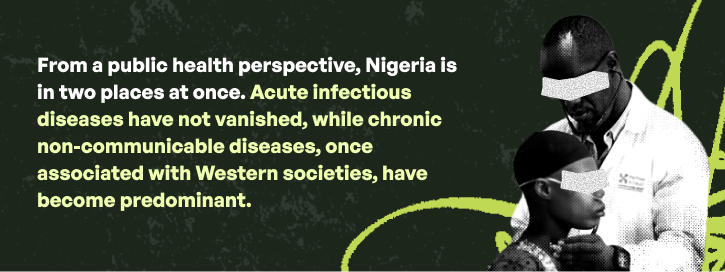
  • From a public health perspective, Nigeria is in two places at once. Acute infectious diseases common in underdeveloped societies have not vanished, while chronic non-communicable diseases (NCDs), once associated with Western societies, have become predominant.

    A changing demographic makeup is one of several factors driving this transition. A woman who might have died in childbirth survives the birth of five children; in her fifties, she confronts cervical cancer. A child who in decades past might have died from a vaccine-preventable disease now reaches middle age, and, because of changes in risk factors such as diet and lifestyle—another driver of this transition—he encounters type 2 diabetes and grapples with the new health and economic costs of living with a long-term illness.

    Even as NCDs currently account for around 29% of total deaths in Nigeria, the infectious disease burden remains high. The WHO estimates that one quarter of Nigeria’s population contracted malaria in 2021. Cholera and tuberculosis outbreaks still ravage communities nationwide. Four of the five neglected tropical diseases that can be tackled through mass drug administration (MDA) are endemic in Nigeria. Despite these realities, our health systems have not adopted balanced policies that suitably confront the changing patterns of disease.

    The 2014 National Health Act was a commitment to investing in the health system to achieve universal health coverage. Under the Act, the Basic Health Care Provision Fund (BHCPF) covers a limited suite of health services known as the Basic Minimum Package of Health Services (BMPHS), which includes maternal health, immunisation services and the treatment of childhood illnesses like diarrhoea and pneumonia, as well as screening and basic outpatient care for type 2 diabetes and hypertension. 

    While many PHCs provide key maternal and child health services, they are ill-equipped to manage NCDs. The WHO’s 2018 NCD Country Profile for Nigeria revealed that primary health care centres are unprepared to handle cardiovascular disease (CVD). The Country Profile also indicated that no PHC facilities reported offering CVD risk stratification or guidelines, while essential medicines and equipment for NCD treatment were largely unavailable. No PHC could provide information on the availability of drug therapy and counselling to prevent heart attacks and strokes.

    Regional disparities compound the issue. Facility readiness for NCD care is higher in Nigeria’s Southern region compared to the North. Lagos, FCT and Rivers rank highest in readiness while Katsina and Gombe rank among the lowest.

    Nearly 40% of Nigerians live with hypertension, the top risk factor for stroke and coronary heart disease. But with limited routine screening and subtle symptoms, it can go undiagnosed for years; patients arrive at health facilities in advanced stages of the disease.

    In rural communities, where specialists are scarce, patients leave PHCs with referral slips and little relief. BHCPF coverage can extend to secondary facilities, but mainly for services defined within the minimum package: screening, diagnosis and disease management. Yet it is often insufficient to cover prolonged costs associated with chronic illness. Although the BHCPF recognises insulin as an essential medicine for managing diabetes, a coronary heart disease risk equivalent, funding and supply chain constraints mean it is often unavailable.

    Tertiary facilities offer more specialised care, but a high patient burden and infrastructure challenges impede patient outcomes. The shortage of radiotherapy machines illustrates the infrastructure gap. Despite needing at least 280 machines to serve its current population of cancer patients, Nigeria has fewer than 10 consistently functional machines across tertiary facilities. These infrastructural and diagnostic challenges force patients to seek care in private facilities that demand high out-of-pocket costs.

    State Matters

    Across states, disparities in health spending are evident. Although the overall size of federal and state allocations determines the total resources available, decisions on how to fund primary health care lie with the states.

    The Nigeria Health Commissioners Forum and Tekano Group analysed state budgets for 2022–2024, noting that during this timeframe, the average share of state health expenditure declined. Although overall state fiscal expenditure surged, state health spending showed wide divergence, ranging from less than 50 cents per capita to US$5.90. This variance was not determined solely by fiscal strength, as the highest-spending states were not necessarily those with the largest resource allocations, but those that prioritised health in their state budgets.

    Bauchi State, for instance, with an overall resource allocation of less than US$50 per capita, dedicated over 14% of this share to health. In comparison, Bayelsa State, which received more than three times Bauchi’s overall resource allocation, devoted only around 4% of this to health.

    One of the reasons Nigeria’s maternal health burden remains high, in spite of the donor funds invested, is rural–urban, state and zonal access disparities in service availability. A woman living in an urban area is twice as likely to give birth in a health facility as a woman living in a rural area, where distance, transportation, family and traditional beliefs can pose real barriers to skilled birthing care. This disadvantage extends to the child: the infant mortality rate in urban areas is 53 per 1,000 live births; in rural areas, this figure swells to 77 per 1,000 live births.

    Ramping up local financing 

    Over the past few decades, donor funding and external aid have largely financed disease prevention and management. However, in 2025 and 2026, at a time when longtime donors were visibly scaling back aid, the Nigerian government raised its healthcare investment through a 60% budget increase and the expansion of the BHCPF, which is projected to reach ₦298 billion by 2026. Substantial international partnerships, such as US$515 million in targeted US assistance and a US$500 million World Bank credit facility, also continue to bolster domestic efforts.

    In late 2025, a circulating “Red Letter” announced that the Health Minister, Muhammad Ali Pate, had released ₦32.9 billion to the BHCPF, primarily urging community ownership and accountability for rural PHCs. However, domestic budget lines do not disaggregate clear line items for NCD prevention interventions, and below the tertiary and secondary health systems, health worker capacity to detect NCDs such as heart disease, cancer, and diabetes (types 1 and 2) is nearly non-existent.

    Despite these increased investments, Nigeria lags behind other low-income countries by nearly 40 percentage points in health spending and out-of-pocket medical expenditure. An even more disturbing systemic issue is that high budgetary allocations do not always translate to the actual release of funds.

    Why do funds get stuck?

    A critical barrier to bridging NCD health inequalities is ensuring that funds reach frontline facilities. In what is known as the “paper budget phenomenon,” large sums are appropriated for capital health projects, with only minimal funds reaching health facilities. A February 2026 report reveals that while ₦218 billion was allocated for health projects in 2025, only ₦36 million was released. This amounts to less than 1%: 0.02%, to be exact.

    This inefficiency points to a fragmented stakeholder landscape. The Federal Ministry of Health blames the “cash planning system” of the Accountant-General’s office for delays. Health funds reach states through three primary gateways: the National Primary Health Care Development Agency (NPHCDA), the National Health Insurance Authority (NHIA) and the Nigeria Centre for Disease Control (NCDC). Although the NPHCDA gateway is designed for direct transfer, some states still experience delays. Funds can sit in state accounts for months before PHCs receive them. 

    In 2025, records in states like Kano showed that BHCPF releases for the first two quarters did not reach facilities until August. In some states, funding makes little difference. In Ogun State, where over ₦1.4 billion was received between 2023 and 2025, it is impossible to distinguish PHCs funded under the BHCPF from those that received no funding, as facilities are short-staffed, poorly equipped, lack safe infrastructure, and some centres are abandoned.

    Partners, like Gavi and the World Bank, are taking a firmer stance, refusing to release funds without clear governance milestones. This is known as the Program-for-Results (PforR) model. It places a unique focus on results and withholds disbursements until institutions can prove that they have achieved specified results.

    Far-reaching consequences

    This disconnect carries more than logistical consequences. Hospital upgrades are delayed. Health workers are denied basic tools. Lives are lost. For women, this gap translates into a shortage of emergency obstetric care; for young medical professionals, it means seeing no future in under-equipped facilities, fuelling brain drain. Funding alone is insufficient without a parallel commitment to accountability in disbursement processes.

    NCD rates are rising, and they come with a lifetime burden. These conditions are not absent from Nigeria’s most remote rural communities, yet domestic and donor funding still focuses mainly on infectious diseases. Without fiscal policies that prioritise prevention, crushing health care costs will impact individuals forced to bear out-of-pocket expenses and national health systems.

    Preventive health is foundational to the health system. Beyond the health benefits, it reduces economic losses from low productivity and absenteeism. Public health advocacy campaigns often pursue policy shifts and strong provisions that can be implemented at the state and local levels. Many policy successes, however, remain as elite-level achievements that never translate to real systemic shifts. Strong implementation, tied to political will, is often the missing link.

    Recommendations

    Bridging inequalities will centre on expanding essential services under BHCPF 2.0. The government’s transition to BHCPF 2.0, which aims to expand direct financing from 8,000 to 13,000 facilities, must explicitly include basic NCD management, such as blood pressure medication, alongside its successful provision of emergency obstetric care to women.

    To address bottlenecks to funds reaching communities, prevention-focused policies, such as taxes on sweetened beverages, alcohol and tobacco, can directly finance community-level interventions. Mass hypertension, breast and cervical cancer screenings, prostate exams, and school-based nutrition education, for instance, can shift the focus from expensive tertiary cures to cost-effective community prevention.

    Resources must be made available, whether through state-run mobile clinics that traverse LGAs to reach hard-to-reach communities at scheduled outreach interventions, or more fully equipped frontline facilities. Strong, government-backed public awareness initiatives will counter public viewpoints that prevention costs more than treatment and normalise behaviours such as hygiene and healthy dietary practices that can keep both communicable and non-communicable diseases at bay.

    Accountability must be treated as a prerequisite for investment, not an afterthought. This requires greater state-level oversight alongside community-led monitoring. Citizen-led budget tracking, where local communities verify if drugs actually arrive at their PHC, can force leakages to close organically.

    Introducing financial incentives that reward proven impact can also close inequality gaps. In 2025, the Nigeria Governors’ Forum named Yobe the best-performing state for primary healthcare, citing rigorous data quality and community engagement. This award secured the state $1.2 million in performance rewards. Accountability not only prevents waste but also attracts more funding. To scale this success, the government must require the publication of financial reports on BHCPF use from the start and set transparency precedents to guide future programmes.

    The HOPE-GOV Program (2025–2026) offers a model: $480 million is disbursed to states only after achieving specific Disbursement-Linked Indicators, such as producing audited financial statements or improving rural health worker deployment. By ensuring that allocated funds are released only upon proof of impact, this model can end the cycle of wasted paper budgets, create a fiscal environment where sorely needed funds can finally reach facilities—and people—at the last mile first, and meaningfully reduce health inequalities across Nigeria.

  • Health is fundamentally a political choice – a choice that is made in laws, regulations and policies, but also in budgets, and decisions about how economies are structured.”

    – Dr Tedros Adhanom Ghebreyesus, Director-General, World Health Organisation.

    Health systems are ultimately shaped by political choices. Decisions about financing, governance, and service delivery determine who can access care, when they receive it, and at what cost. In Nigeria, where an estimated population of 232 million people depend on a health system facing persistent resource constraints, the consequences of those choices are increasingly visible.

    While decisions about healthcare are becoming more urgent, the gap between policy intent and implementation remains significant. During the 2026 budget defence, the Coordinating Minister of Health revealed that only ₦36 million had been released from the ministry’s ₦218 billion capital allocation for 2025, highlighting the challenges that continue to undermine the delivery of health services despite ambitious commitments.

    With just over 21 million Nigerians covered by some form of health insurance, 70% of healthcare-related expenses in Nigeria come from out-of-pocket payments at the point of use, placing a financial strain on households and often delaying access to care.

    Recent reforms that replaced the National Health Insurance Scheme (NHIS) with the National Health Insurance Authority (NHIA) shifted health insurance from a voluntary scheme to mandatory coverage, aimed at reducing inequality, improving accessibility, and strengthening financial protection across the system. To drive compliance, in 2025, President Bola Tinubu issued a directive mandating all Ministries, Departments, and Agencies (MDAs), along with all entities participating in public procurement, to implement health insurance in line with the NHIA.

    How financing shapes access to healthcare

    Compulsory insurance is expected to help reduce income inequality, which remains relatively high in Nigeria compared to peer countries. For many, especially those in rural areas or working in the informal sector, health care is something to be paid for when illness strikes rather than a service that can be readily relied on. This pattern reflects deeper structural issues that have persisted over time.

    Data from the World Health Organisation (WHO) Global Health Expenditure Database shows that Nigeria’s Current Health Expenditure as a percentage of Gross Domestic Product averaged around 4% between 2016 and 2023. Given the country’s population, disease burden, and ambitions for universal health coverage, this level of investment remains low and points to a broader issue of how health is prioritised within national planning, a pattern that has remained largely unchanged across successive administrations.

    The consequences of these financing constraints are evident across the health system. The Lancet Nigeria Commission highlights longstanding challenges, including fragmentation across federal, state, and local levels, persistent inequities in access to care, and chronic underinvestment in primary healthcare. While reforms such as the Basic Health Care Provision Fund have sought to strengthen health financing and expand access to primary care services, progress in health outcomes has been uneven. As a result, access to healthcare in Nigeria continues to be shaped as much by an individual’s ability to pay as by their health needs.

    Who shapes the system, and who is accountable?

    Nigeria’s health system is not short of actors. Federal, state, and local governments all have a role, yet responsibilities often overlap, creating gaps in accountability and implementation. Plans made at one level do not always show up at another, contributing to persistent weaknesses in service delivery. As a result, the way the system is financed and governed continues to shape who can access care, when they receive it, and the quality of services available.

    The private sector is already a significant part of care delivery in Nigeria, and for many people, is the first point of contact for both routine and emergency care. Despite its importance, integration between private and public providers remains limited. Donors have long shaped health interventions, often reflecting their own priorities, playing a major role in immunisation, maternal health, and nutrition. While these programmes have made a difference, they have also contributed to a system that feels pieced together, with initiatives running alongside each other rather than working as one. The resulting lack of coordination contributes to variations in the quality of care, creating challenges for patients navigating different levels of the health system and making it harder to build a system people can rely on no matter where they live.

    The Sector-Wide Approach (SWAp) seeks to address this by reducing fragmentation, aligning funding with national priorities, and moving away from programmes that duplicate efforts without strengthening the broader healthcare system. However, as donor funding shrinks and global priorities shift, broader questions about long-term financing and health sovereignty are becoming increasingly prominent.

    There have been efforts to fix some of these gaps. The Basic Health Care Provision Fund, established under the National Health Act in 2014, was intended to provide direct funding to primary health care and expand access to basic services. In October 2025, the Coordinating Minister of Health, Professor Muhammad Ali Pate—calling on Nigerians to take ownership of their health and signalling a renewed push to strengthen the system—noted that ₦32.9 billion had been released to primary health care facilities.

    Despite the call, little has been done to provide clarity on how the fund was disbursed, making it hard for communities to monitor spending and hold decision-makers accountable. The Supreme Court’s affirmation of the financial autonomy of Nigeria’s 774 local governments should, in principle, mean primary health care decision-making is closer to communities and makes the system more responsive. However, without greater transparency in the management and allocation of funds, it is difficult for citizens to follow the money and assess whether resources are reaching the services they are intended to support.

    What happens if nothing changes?

    The consequences of these governance and financing challenges are evident in health outcomes across the country. For many women, pregnancy and childbirth still come with real risks, often shaped by delays in getting care or the quality of care available when they arrive. Preventable maternal deaths and adverse outcomes continue to expose persistent gaps in the health system. In some parts of the country, children still miss routine vaccines, leaving communities exposed to diseases that should no longer be a threat. Malnutrition also remains a concern, not only because of food availability, but also because health, nutrition, and social support systems are not working together consistently.

    Young people face their own challenges. Access to sexual and reproductive health services is still uneven, and many are left to navigate these issues without the information or support they need. These challenges reflect broader inequities within the health system, where access to care continues to be shaped as much by income and location as by need.

    The result is that many people delay seeking care until conditions worsen or rely on the services they can afford rather than those most appropriate to their needs. Over time, this reinforces disparities in health outcomes across regions and socioeconomic groups.

    With elections approaching, there is a window to shift how health is prioritised at the federal, state, and local levels. But without stronger coordination, greater accountability, and more effective use of available resources, progress is likely to remain uneven, leaving many Nigerians excluded from the benefits of a health system intended to protect and improve their well-being.

    What needs to be done?

    In many countries, elections are shaped by public expectations on issues like health. In Nigeria, this link is not always as strong. Ahead of the 2019 elections, Nigeria Health Watch, in collaboration with NOIPolls, carried out a survey under the #Vote4HealthNaija campaign to understand what drives voting decisions. Despite health ranking high among the priorities Nigerians care about, it has not consistently translated into clear or detailed health commitments in political manifestos.

    The COVID-19 pandemic brought health to the centre of national attention. It showed what happens when systems are stretched and why preparedness matters. It would be easy to assume that this experience would shift how health is prioritised. But subsequent budget allocations and releases paint a different picture. During the 2026 budget defence, the Coordinating Minister of Health and Social Welfare confirmed that only ₦36 million was released from the ₦218 billion capital allocation for the ministry in 2025.

    If the goal is to avoid repeating the same patterns, then it is not enough to allocate funds on paper; change has to begin with how health is treated within the broader political and economic system, where it is no longer peripheral but central to decision-making, with funding released and accountability built into its delivery.

    There are several areas where practical action could shift outcomes if health is to be treated as central to governance rather than peripheral to it.

    Financing must become more predictable and transparent. A key starting point would be a commitment by the federal government to release at least 50% of capital health budget allocations within each fiscal year, supported by quarterly public reporting. The issue is not only the overall level of health spending, but whether allocated funds are actually released and used for their intended purposes. Strengthening public financial management systems and improving reporting clarity will be essential to ensuring accountability beyond government institutions.

    Primary healthcare must also be repositioned as the foundation of the system rather than an afterthought. This requires sustained investment in frontline facilities, adequate staffing, and reliable access to essential medicines and supplies. It also depends on ensuring that existing reforms, including the Basic Health Care Provision Fund, translate into visible improvements in service delivery at the community level.

    Improved coordination across actors is equally critical. Stronger alignment is needed between federal, state, and local governments, alongside more deliberate integration of the private sector, which already plays a central role in service delivery. The objective should be not only the presence of multiple actors within the system, but their ability to function in a more coherent and complementary way.

    Finally, accountability must be embedded as a routine feature of the health system rather than treated as an external requirement. While policy frameworks already exist, the key challenge lies in ensuring consistent implementation, effective monitoring, and timely adjustment when interventions are not delivering intended results.

    What people can do

    Change cannot come from government alone. Citizens, advocates, and other stakeholders all play a role.

    For citizens, this starts with recognising that health is not only a service but a right that can be demanded. Asking questions about local health facilities, tracking whether services are available, and engaging with local leaders are all part of this. With local government autonomy, there is now a greater opportunity for communities to be more involved and hold those closest to them accountable. This would, of course, require transparency in fund disbursements. Elections also provide an important moment to push for clearer commitments on health and to hold leaders accountable for them.

    For civil society and health advocates, staying consistent and visible is essential. Advocacy cannot only happen during crises or around major events. It needs to be sustained, evidence-based, and connected to what people are experiencing on the ground. There is also a role in translating complex policy and financing issues into language that communities can understand and act on.

    For policymakers, the task is to move beyond statements of intent. This means making decisions that reflect the importance of health, ensuring that funds are released and used effectively, and creating space for feedback from those who rely on the system.

    At its core, this is about recognising the political economy of health. Decisions about health are shaped by priorities and trade-offs. Changing outcomes will require shifting those choices so that health is treated as a shared responsibility and a long-term investment in the country’s future. This goes to the heart of why health is a political choice that is ultimately shaped at its core by how resources and priorities in the country are set, and where citizens demonstrate their agency, and as Chude Jideonwo stated in his 2014 TEDxEuston talk, the most important office in a democracy is the “office of the citizen”.